

Kyran Wright, manager of the Zandvlei Estuary Nature Reserve, talks about the Marina Waterways.
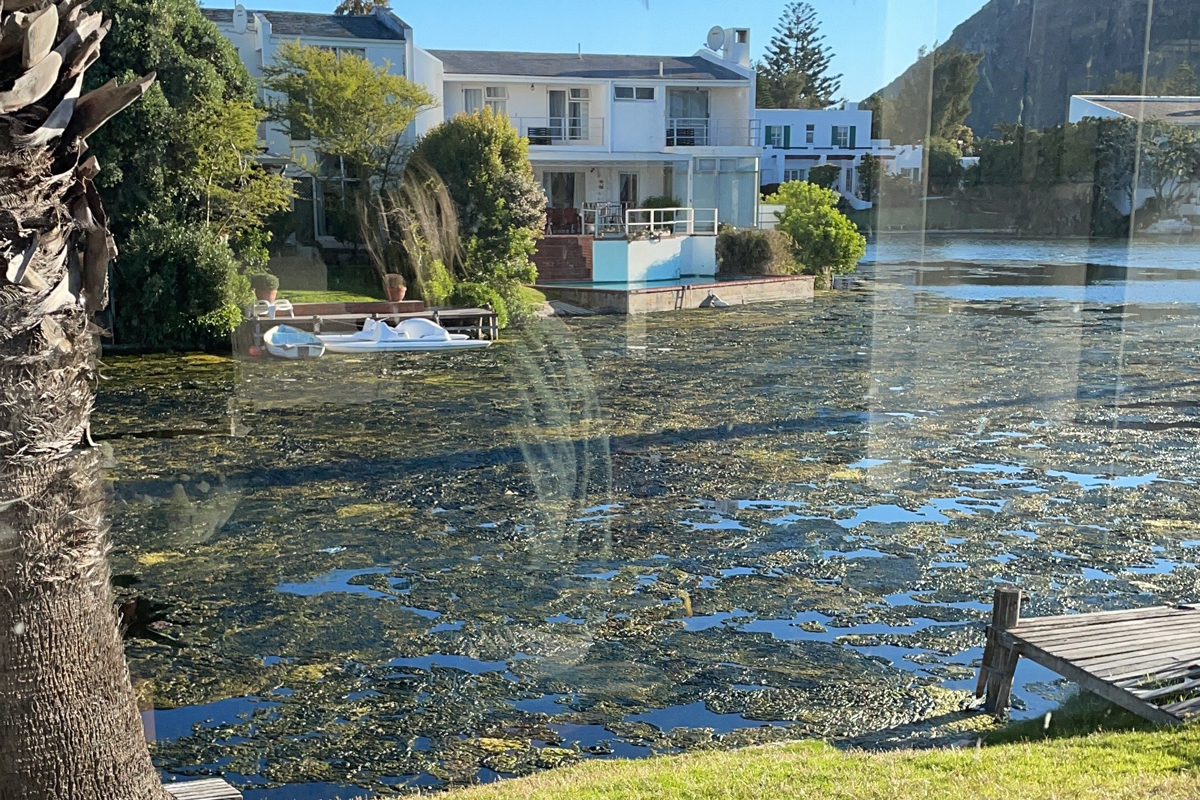
It is true that pondweed and algae are an issue within the Zandvlei waterways, as evidenced by the current accumulation present in Marina Da Gama.
For almost 50 years, Zandvlei has had some form of weedharvesting conducted within the waterbody- as an urban estuary, the vlei is eutrophic, meaning that there is an excess of nutrients in the system, leading to primary production and plant/algal growth. The eutrophic state is primarily linked to catchment based impacts (fertilisers, inputs from industrial areas and sewage spills) and with the densification and urbanisation experienced in the area over the past 20-30 years, these impacts have steadily increased, leading to difficult summer months, when plant growth is at its peak.
The old weedharvester, the Kingfisher, is roughly 45 years old and prone to breakdowns. Due to the significant need for a new, more reliable and effective vessel, the City began a procurement process nearly five years ago to replace this vessel. Some tender issues led to delays in the delivery of this new vessel, however we were happy to accept delivery of the new weedharvester, the Cape Shoveler, in December last year. This vessel has not been formally handed over to us, the management authority, as of yet, as it required certain modifications, tests and seaworthiness trials before we can become operational. These have been underway since delivery and we are close to taking full ownership of the vessel- we should hopefully see it on the waterways soon.
Despite the wait for the new vessel, the Kingfisher has spent a significant amount of time on the water in the past few months, trimming pondweed and collecting algae, however there are some restrictions to our work, which can cause confusion and concern. Primarily, we are unable to operate in high wind conditions due to safety concerns, we have had a particularly windy December, which has led to limited operational hours, and build-up of algae in certain canals. Another limitation is that we are unable to clear the 2m strip in front of Marina properties- this is due to the risk of damage to private property (including jetties and watercraft) as well as the damage that can be done to the revetments in the area. This 2m strip, is the private residents’ responsibility to clear.


St Francis Marina is often used to compare to the Marina waterways and while both are Marinas, the reality is that they have very different contexts in terms of water quality and design. St Francis has input almost directly from the ocean, and this seawater is what gives it the aquamarine blue waterways. Marina Da Gama is however set back far away from the estuary mouth and as such is more brackish in nature. The Marina Da Gama development was also incomplete in its origin, and as such, is not properly orientated to encourage water movement within the channels. Some of the worst affected channels are those which are dead ends. Lack of circulation leads to detritus accumulation and prolific algal growth, followed by oxygen depletions. It is a constant challenge to keep these channels clear during the summer months, but our task is more nuanced than this.
Our goal in our weedharvesting programme, is not to clear all algae and pondweed from the Zandvlei waters. In fact, we rely on this growth to clean our water and take out the nutrients, which cause the issues. By harvesting this plant mass, at the correct time in its life cycle, it allows us to physically remove the nutrients from the water, whilst maintaining the aquatic ecosystem. Many fish and crustacean species rely on the pondweed and algae, and this habitat forms an important part of the Zandvlei ecosystem. Weedharvesting is an “ecological management tool”, not a service to keep waterways spotless. In the past, when we have overharvested, it has led to pondweed crashes and toxic algal blooms (responsible for mass fish die offs). We have not had such an incident since 2010.
Water quality results for the estuary are shared via our Protected Area Advisory Committee when they become available. Our water quality over the past year has been very good, certainly in comparison to previous years, despite the challenges our colleagues face at Water and Sanitation during loadshedding. Whilst weedharvesting is aimed at addressing the symptoms of our catchment issues, there are a variety of other plans, programmes and capital projects in the pipeline, specifically aimed at addressing catchment related issues, such as the Liveable Urban Waterways Programme, Vlei Remediation Programme (including exploring the possibility of a major dredge of the vlei) and the Sand River Catchment Forum which has recently been relaunched with new energy.
While the algae in the Marina is an eyesore, the underlying water quality, chemistry and biota are actually in their best state in many years, as confirmed by independent consultants as part of our Estuary Management Plan revision process. We continue to tend to the urgent needs whilst attempting to address cause issues, which will benefit the Zandvlei for present and future generations. It is a critical biological resource, one we cannot afford to lose.


